News
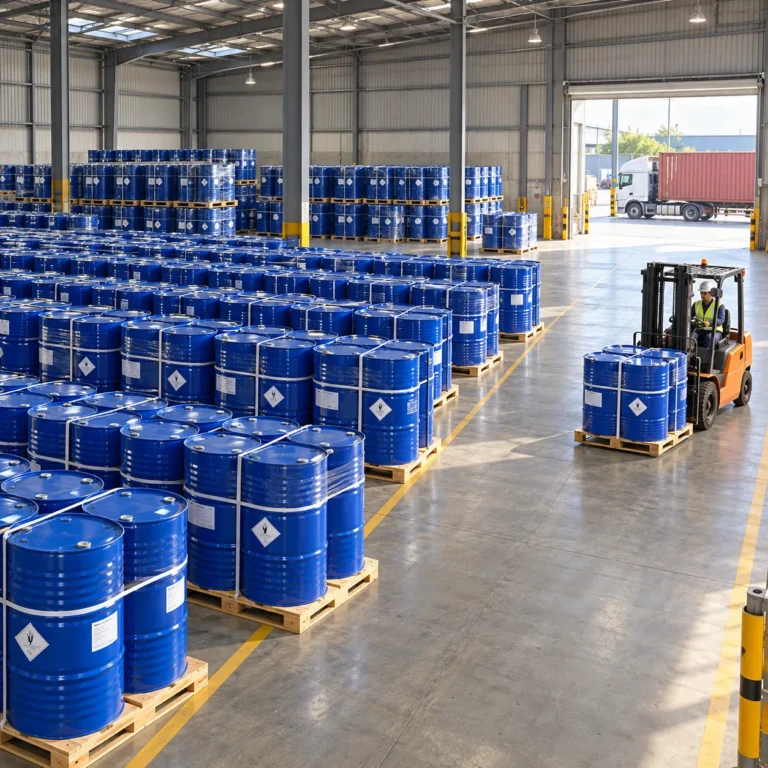
Chemical Solvents Market Trends, Growth & Forecast to 2034
Executive Summary: A Thriving Global Market for Chemical Solvents The global chemical solvents market is poised for substantial expansion between 2025 and 2034, driven by robust demand from end-use industries such as paints and coatings, pharmaceuticals, and adhesives. Market analysts project a compound annual growth rate (CAGR) of approximately 5% to 7% over the forecast period, with the market size expected to surpass USD 45 billion by 2034. Key growth drivers include rapid urbanization, rising automotive production, and an accelerating shift toward bio-based and low-VOC chemical solvents that meet stringent environmental regulations. Asia Pacific continues to dominate both production and consumption, with China and India emerging as manufacturing powerhouses. As a reliable supplier in this landscape, Shandong Fengtong Chemical Co., Ltd offers a comprehensive portfolio of high-purity chemical solvents tailored to diverse industrial applications. The increasing adoption of waterborne and green solvent formulations reflects a structural transformation in how industries approach sustainability without compromising performance. Manufacturers are investing heavily in research to develop bio-based alternatives derived from renewable feedstocks, reducing dependency on petrochemical sources. Strict regulations in North America and Europe regarding volatile organic compound (VOC) emissions are further accelerating this transition. The breadth of application—from industrial cleaning to pharmaceutical synthesis—ensures that demand for chemical solvents remains resilient across economic cycles. Shandong Fengtong Chemical leverages its extensive production capacity and quality control systems to meet this growing need with consistency and cost-efficiency. Market Trends Shaping the Future of Chemical Solvents The most transformative trend in the chemical solvents market is the unmistakable shift toward environmentally friendly and bio-based solvents, driven by tightening regulations and corporate sustainability commitments. End users are increasingly replacing traditional hydrocarbon-based solvents with esters, alcohols, and ketones derived from renewable sources such as corn, sugarcane, and cellulose. Innovations in solvent recycling and recovery technologies are also gaining traction, allowing manufacturers to reuse chemical solvents multiple times and significantly reduce waste and operational costs. The development of high-performance green solvents for specialized applications—like electronics cleaning and pharmaceutical intermediates—is opening new revenue streams for agile producers. Shandong Fengtong Chemical actively monitors these trends to align its product development roadmap with evolving customer expectations. Technological innovations in solvent synthesis and purification are enabling higher purity grades and better batch-to-batch consistency, which are critical for sensitive applications in the pharmaceutical and semiconductor sectors. Digitalization of supply chains and real-time quality monitoring are helping suppliers respond faster to market fluctuations. The rise of electric vehicles and renewable energy infrastructure is creating new demand for chemical solvents used in battery electrolyte formulations and composite manufacturing. Additionally, the coatings industry is reformulating products to reduce solvent content while maintaining application properties, pushing suppliers to offer tailored solutions. These trends collectively reinforce the importance of partnering with a supplier that invests in innovation, such as Shandong Fengtong Chemical, which continuously upgrades its production technologies. Market Dynamics: Drivers, Restraints, and Opportunities Robust growth in the construction and automotive sectors remains the primary driver for chemical solvents demand, as these industries consume large volumes of paints, coatings, adhesives, and sealants. Rapid infrastructure development in emerging economies, coupled with rising vehicle ownership, directly translates into increased consumption of solvents like toluene, xylene, and acetone. The pharmaceutical industry also contributes steady demand for high-purity chemical solvents used in drug synthesis, extraction, and formulation processes. However, volatility in raw material prices—particularly crude oil derivatives—poses a significant restraint, squeezing margins for manufacturers that cannot pass on cost increases to customers. Geopolitical tensions and supply chain disruptions further compound this uncertainty, making supply reliability a critical differentiator. A major opportunity lies in the expansion of solvent recycling and recovery services, which allow industrial users to reduce their environmental footprint while lowering procurement costs. Closed-loop solvent management systems are being adopted by large manufacturers in the automotive and electronics sectors, creating a secondary market for reclaimed chemical solvents. Another promising avenue is the development of bio-based solvents that meet performance benchmarks for demanding applications such as industrial cleaning and printing inks. Companies that can offer custom formulation services and technical support are better positioned to capture premium segments of the market. Shandong Fengtong Chemical addresses these dynamics by maintaining flexible production capabilities and a customer-centric approach that includes custom solvent blends and reliable logistics. Market Segmentation by Product Type and Application Segmentation by Product Type The chemical solvents market is broadly categorized into alcohols, ketones, esters, hydrocarbons, and chlorinated solvents, each serving distinct industrial functions. Alcohols such as methanol, ethanol, and isopropanol are among the most widely used chemical solvents, valued for their polarity, miscibility with water, and relatively low toxicity. Ketones—including acetone and methyl ethyl ketone—offer excellent solvency for resins, paints, and adhesives, and are indispensable in the coatings industry. Esters like ethyl acetate and butyl acetate are prized for their mild odor and favorable evaporation rates, making them ideal for printing inks and cosmetic formulations. Hydrocarbon solvents such as toluene, xylene, and hexane remain popular in rubber, adhesives, and extraction processes despite increasing regulatory pressure. Chlorinated solvents—including methylene dichloride (dichloromethane)—are essential for specific applications like paint stripping, metal cleaning, and pharmaceutical synthesis due to their non-flammability and strong solvency. The market is seeing a gradual shift away from traditional chlorinated and aromatic hydrocarbons toward oxygenated and bio-based alternatives as regulations tighten. Each product segment has distinct pricing dynamics, supply chain characteristics, and regulatory considerations that buyers must navigate carefully. Producers like Shandong Fengtong Chemical offer a broad product portfolio that spans multiple categories, enabling customers to consolidate sourcing and simplify procurement. By maintaining high purity standards and competitive pricing across its product range, the company helps clients optimize their solvent supply chain. Segmentation by Application Paints and coatings represent the largest application segment for chemical solvents, consuming substantial volumes of acetone, toluene, xylene, and esters in both architectural and industrial formulations. Printing inks form the second major application, where solvents like ethyl acetate, isopropanol, and hexane are used to achieve the correct viscosity, drying time, and print quality. Industrial cleaning and degreasing is another critical application, relying on powerful chemical […]
Check ↗
What are chemical solvents used for?
Shandong Fengtong Chemical Co., Ltd isa leading company integrating R&D, producing and trading for various chemical solvents. Fengtong has established a good brand reputation and commercial credibility in the chemical industry, winning the trust and support of numerous customers. Solvents are chemicals that dissolve, extract, or suspend other substances, typically in liquid form, but can also be solid or gas. They are categorized as polar or nonpolar based on their structure and charge, influencing what they can dissolve. Examples of polar solvents include water, acetone, and methanol, while nonpolar solvents include benzene and toluene. Common Solvents: A nonpolar solvent, used in paint thinners and as a degreaser. Solvent Applications: Solvents like acetone, toluene, and trichloroethylene are used to remove grease, grime, and other contaminants. Solvents are used in various industries, including manufacturing, pharmaceuticals, and construction.
Check ↗