News
Phenolphthalein: Properties, Uses, Applications, and Buying Guide
Phenolphthalein is a well-known chemical compound widely used as an acid-base indicator in laboratories and analytical chemistry. Its distinctive color change under different pH conditions makes it a useful reagent for titration, chemical analysis, and educational experiments. For chemical distributors, laboratory suppliers, and industrial buyers, understanding the properties, applications, and purchasing considerations of phenolphthalein is important when selecting a suitable supplier. In this article, we will explore what phenolphthalein is, how it works, its main applications, and what buyers should consider when sourcing this chemical. 1. What Is Phenolphthalein? Phenolphthalein is an organic compound commonly used as a pH indicator in acid-base titration. Basic product information: Phenolphthalein is generally supplied as a white to pale yellow crystalline powder. It is practically insoluble in water but can dissolve in certain organic solvents and alkaline solutions under appropriate conditions. Its performance and suitability depend on the required grade, purity, formulation, and intended application. 2. How Does Phenolphthalein Work as a pH Indicator? One of the most important characteristics of phenolphthalein is its color response to changes in pH. In acidic and near-neutral solutions, phenolphthalein is generally colorless. When the pH increases into its transition range, the solution changes to pink or magenta. Its commonly cited pH transition range is approximately 8.2–10.0. This property makes phenolphthalein useful in acid-base titration, particularly when the endpoint falls within a suitable pH range. For example, during the titration of hydrochloric acid (HCl) with sodium hydroxide (NaOH), phenolphthalein can help indicate the endpoint through a visible color change, provided the titration conditions are appropriate. The exact endpoint suitability depends on the acid, base, concentration, and analytical method being used. 3. Main Applications of Phenolphthalein 3.1 Acid-Base Titration One of the most common applications of phenolphthalein is acid-base titration. Laboratories use it to help identify the endpoint of certain neutralization reactions. Its visible color change makes it convenient for routine analytical procedures and chemistry experiments. 3.2 Analytical Chemistry Phenolphthalein is used as an indicator in selected analytical methods where a clear visual transition is helpful. Laboratory technicians and analytical chemists should select the appropriate indicator according to the target reaction and validated testing procedure. 3.3 Educational Laboratories Schools, universities, and training laboratories use phenolphthalein in chemistry demonstrations and experiments involving acids, bases, and pH changes. Its color transition provides a straightforward way to demonstrate acid-base behavior. 3.4 Chemical Reagent Supply Phenolphthalein is also traded through chemical reagent distributors and laboratory supply companies. Buyers may require different packaging sizes and specifications depending on whether the product is intended for routine laboratory use, distribution, or a particular analytical application. The appropriate grade should always be confirmed before purchase. 4. Phenolphthalein Powder vs. Indicator Solution Phenolphthalein is available in different forms, depending on the supplier and intended use. Phenolphthalein powder Phenolphthalein indicator solution When purchasing, buyers should confirm whether they need the solid compound or a prepared indicator solution. These products have different specifications and may require different shipping and storage arrangements. 5. What Should Buyers Check Before Purchasing Phenolphthalein? Selecting a suitable supplier involves more than comparing prices. Chemical buyers should evaluate several important factors. Product Purity and Specifications Confirm the required purity, applicable testing standards, and intended grade. Request a Certificate of Analysis (COA) for the relevant batch when available. Technical Documentation Review the product specification, Safety Data Sheet (SDS), and other documentation required for your application and local regulations. Packaging Requirements Check the available packaging sizes, container compatibility, labeling, and protection against moisture or contamination during storage and transportation. Supply Capacity and Lead Time For distributors and repeat buyers, consistent availability and realistic delivery schedules are important factors in maintaining inventory. Export and Shipping Support International buyers should confirm export documentation, destination-country requirements, transport arrangements, and any applicable restrictions before placing an order. A reliable sourcing process helps reduce purchasing risks and supports long-term cooperation between buyers and suppliers. 6. How to Store and Handle Phenolphthalein Phenolphthalein should be handled according to the instructions in the supplier’s Safety Data Sheet. General precautions include: Phenolphthalein has been classified as a potential health hazard in certain regulatory frameworks. It should not be assumed to be harmless simply because it is commonly used in laboratory experiments. Always review the current safety documentation and applicable local regulations before use or purchase. 7. Frequently Asked Questions About Phenolphthalein Q1: What is the CAS number of phenolphthalein? The CAS number of phenolphthalein is 77-09-8. Q2: What color is phenolphthalein in an alkaline solution? Phenolphthalein generally turns pink to magenta in alkaline solutions within its pH transition range. Q3: What is the pH range of phenolphthalein? Its commonly cited transition range is approximately pH 8.2–10.0. Q4: Is phenolphthalein soluble in water? Phenolphthalein is practically insoluble in water. Its solubility depends on the solvent and solution conditions. Q5: What documents should I request when purchasing phenolphthalein? Depending on the application and destination, buyers may request a COA, SDS, product specification, and relevant shipping or regulatory documents. Q6: How can I choose a suitable phenolphthalein supplier? Compare product specifications, documentation, packaging options, supply reliability, export experience, and total delivered cost. Confirm that the supplier can meet your specific quality and regulatory requirements. 8. Looking for a Phenolphthalein Supplier? Choosing the right chemical supplier can help distributors and laboratory buyers maintain consistent product quality and a reliable supply chain. When sourcing phenolphthalein, clearly define your required grade, quantity, packaging, destination, and documentation requirements. This information helps suppliers provide a more accurate quotation and determine whether they can meet your purchasing needs. At Shandong Fengtong Chemical Co., Ltd., we focus on supplying chemical products to international markets. If you are sourcing phenolphthalein or other chemical raw materials, you can contact our team to discuss product availability, specifications, packaging, and export requirements. Contact us for product information and a quotation: Contact us with your required quantity, destination country, and product specifications so we can better understand your sourcing needs.
Check ↗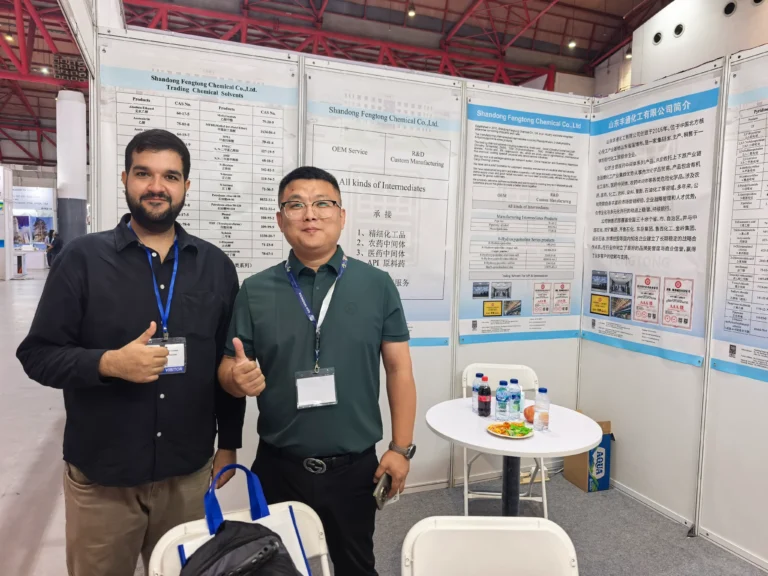
What to look at in the fifteen minutes you have before the hall closes.
Trade show halls are designed to look alike: a banner, a counter, a row of labelled bottles, a stack of brochures. An hour into walking the floor, most stands blur into one. The differences that matter to a buyer are rarely visible from the aisle. They sit in the paperwork, the packing and the person — three places worth spending your fifteen minutes. What follows is a short list of what to check, and what a good answer looks like. 01. Whose name is on the licence Ask to see the hazardous-goods packing licence and the inspection and quarantine registration. These are the documents that decide whether your container moves or sits. The detail worth reading is the name on them. A supplier that holds these licences in its own name can pack, label and declare dangerous goods itself. A supplier that holds them through a partner is handing your cargo to a third party whose standards you have not assessed — and whose delays become your delays. Good sign: the certificates are produced without hesitation, in the company’s own name. Warning sign: “our forwarder handles that.” 02. The document folder, not the brochure Anyone can print a brochure. Ask instead to see a real certificate of analysis from a recent batch, and a safety data sheet in the format your market requires. What you are checking is not perfection but habit — whether the supplier treats paperwork as part of the product or as an afterthought. Look at whether the COA is batch-specific or a generic template, whether the SDS follows GHS structure, and whether a certificate of origin is something they raise before you do. Good sign: a current COA and SDS, offered as a matter of course. Warning sign: documents “available later, once you place the order.” 03. A packing sample you can handle Photographs of drums tell you very little. If the stand has a 200 L drum, a 1,000 L IBC or ISO tank fittings on display, pick them up, read the labelling, look at the closures. Packing is where complaints originate — a liner that reacts, a label that will not survive a humid port, a closure that weeps in transit. A supplier that repacks in its own warehouse can adjust these details on request. One that forwards someone else’s drums usually cannot. Good sign: packing samples on the stand, and a supplier able to discuss liner and label specifications. Warning sign: “standard export packing” as the only answer available. 04. Whether the person knows the chemistry Specification tables are easy to copy. Understanding is not. Ask something a datasheet cannot answer: how this grade behaves in a customer’s process, which impurities are typical, why one salt would be chosen over another. You are not looking for a laboratory answer — you are checking whether the person in front of you has handled the product, or only the price list. Good sign: the answer contains a reaction, a constraint or a trade-off. Warning sign: every question comes back to “we can meet any specification.” 05. How they answer a question they do not like This is the most useful test, and the quickest to run. Ask about delay: what happens when a container is held at customs, when a batch misses specification, when a promised date slips. Every supplier will tell you it does not happen. The informative part is what follows. A supplier with a real operation can describe the sequence — who is notified, how quickly, and what the alternatives are. A supplier without one changes the subject. Good sign: a specific process, described in stages rather than assurances. Warning sign: “that never happens.” What the five have in common None of these checks requires the supplier to be the largest in the hall. All five require the supplier to be specific — about paperwork, packing, chemistry and failure. Specificity is difficult to fake across a counter, which is precisely why it is worth fifteen minutes. For our part, here is what you would find at the Fengtong stand: a Hazardous Cargo Packing Licence and China Inspection and Quarantine registration held in our own name; our own repackaging warehouse and transport system; a COA, SDS and certificate of origin with every shipment; and specifications agreed in writing before production begins. If you would like to run these five checks against us — at our next exhibition, or by email — the team can be reached at johnson@fengtongchemical.com or +86 18405339555.
Check ↗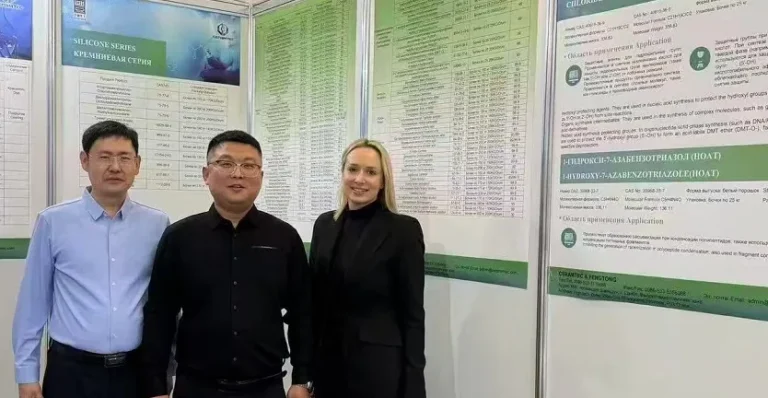
Notes from Booth B2F4-17: What Chemical Buyers Asked at the China Pavilion
Every exhibition leaves you with a stack of business cards and, if it has gone well, three or four conversations that change how you think about your own product range. Our week at [Fair name] under the China Pavilion — booth B2F4-17 — gave us several of those. What follows is what we put on the stand, the questions that came up most often, and how we are answering them. What we brought The stand carried two product lines that buyers did not expect to find in the same place. On the intermediates side: phenolphthalein, the 8-hydroxyquinoline series in its sulfate, copper salt, aluminium salt and lithium salt grades, 2-methylindoline, and the piperonyl series. On the solvent side: acetonitrile, DMSO, DMF, DMAC, dichloromethane, ethyl acetate, IPA and more than thirty grades in total. Alongside the samples we laid out the things buyers actually inspect — 200 L drums, a 1,000 L IBC, ISO tank documentation, and a folder of COAs, SDS and certificates of origin. At an exhibition, the paperwork is part of the product. The three questions we heard most 1. Can you hold the specification, batch after batch? This was the first question from almost every technical buyer, and the right one to ask. A grade that drifts by a fraction of a percent between shipments will show up in a customer’s yield long before it shows up in a complaint. Our answer is procedural rather than rhetorical. The specification, packing and documentation are agreed in writing before production begins; a batch-specific COA ships with every consignment; and retention samples are kept on file, so a question raised six months after delivery can still be answered against the actual material. 2. Who handles the dangerous-goods paperwork? For anyone importing solvents, this is where schedules actually break — not in production, but in the documentation that has to be correct at the port. Fengtong holds a Hazardous Cargo Packing Licence and China Inspection and Quarantine registration in its own name, and operates its own repackaging warehouse and transport system. Dangerous-goods packing, labelling and declarations are handled in-house rather than passed down a chain of forwarders. More than one buyer at the stand described the same experience: a container held for two weeks because a declaration had been filed by a party that had never seen the material. 3. Can you consolidate my list? Buyers who source intermediates and solvents separately end up managing two sets of suppliers, two document sets and two shipping schedules. The question at the stand was whether those could be merged. In most cases they can. With more than thirty solvent grades held in stock and four intermediate families supplied alongside them, a mixed order can travel as one shipment under one quotation and one document set — including mixed loading of intermediates and solvents in the same container where dangerous-goods segregation rules permit. Why we still do face-to-face A specification sheet will tell you a purity figure. It will not tell you whether the supplier understands the reaction behind it, how they respond when something goes wrong, or what happens when a shipment is held at customs. Two conversations at the stand made that point for us. One buyer arrived with a grade that had not dissolved properly in their process; working through the impurity profile and the solvent system on paper settled the question in twenty minutes — a week of email, compressed. Another needed a specific labelling format for their import market, and we could confirm on the spot what we were able to do rather than quote a policy. That is the part of an exhibition that never appears in the lead count. What happens next None of the conversations required a new capability. They required us to state clearly what we already do, and to commit to it in writing: If you stopped by booth B2F4-17, or if the questions above are the ones currently on your desk, the team can be reached at johnson@fengtongchemical.com or +86 18405339555. We are glad to quote a grade, a pack size or a full list.
Check ↗
Industrial Solvents: Types, Uses & Buying Guide from Shandong Fengtong Chemical
Introduction: The Indispensable Role of Chemical Solvents in Modern Industry Chemical solvents are foundational materials that enable countless industrial processes, from pharmaceutical synthesis to paint formulation and precision cleaning operations. These liquid substances dissolve, suspend, or extract other materials without chemically altering them, making them essential for manufacturing, processing, and formulation across virtually every sector of the global economy. Without reliable chemical solvents, the production of medications, adhesives, coatings, and electronic components would grind to a halt, underscoring their critical importance in supply chains worldwide. Industrial buyers recognize that the quality and consistency of the solvents they procure directly impact product performance, safety profiles, and regulatory compliance. As industries continue to evolve toward higher purity standards and more sustainable practices, understanding the full spectrum of solvent options becomes a strategic advantage for procurement professionals and formulation chemists alike. This comprehensive guide explores the major types of industrial solvents, their applications, selection criteria, and how partnering with an experienced manufacturer like Shandong Fengtong Chemical Co., Ltd ensures reliable supply and technical excellence. A Historical Perspective on Solvent Development and Use The story of solvents begins with water, the earliest and most universal solvent known to humanity, used for millennia in extraction, cleaning, and chemical processes. Ancient civilizations discovered that alcohol produced through fermentation could dissolve resins and plant extracts, leading to early perfumes, medicines, and varnishes that transformed daily life and commerce. The Industrial Revolution brought a surge in demand for more powerful and specialized solvents, driving chemists to isolate and synthesize compounds such as diethyl ether, chloroform, and various hydrocarbons that could dissolve materials water and alcohol could not. By the mid-twentieth century, the petrochemical industry had unlocked a vast array of organic solvents, including toluene, acetone, methyl ethyl ketone, and methylene dichloride, each offering unique solvency properties for specific industrial applications. The latter part of the century saw growing awareness of the health and environmental risks associated with traditional solvents, spurring research into safer alternatives and stricter regulatory frameworks that continue to shape the market today. Understanding this historical trajectory helps buyers appreciate why certain solvents dominate specific applications and why the industry is now pivoting toward greener, more sustainable options without compromising performance. Major Chemical Solvent Types and Their Industrial Applications Alcohols: Versatile and Widely Used Solvents Ethanol and isopropanol are among the most familiar alcohol solvents, valued for their moderate polarity, low toxicity, and excellent miscibility with both water and organic compounds. Ethanol serves as a critical solvent in pharmaceutical manufacturing for drug formulation, extraction of active ingredients, and as a disinfectant in healthcare settings, while isopropanol is the workhorse solvent in electronics cleaning, hand sanitizers, and industrial degreasing operations. These alcohols offer a favorable balance of solvency power and safety compared to more aggressive organic solvents, making them suitable for food-contact applications and cosmetic formulations where purity and regulatory compliance are paramount. The renewable nature of bio-based ethanol further enhances its appeal as industries seek to reduce their carbon footprint without sacrificing performance. Manufacturers like Shandong Fengtong Chemical supply high-purity ethanol and isopropanol in multiple grades to meet the stringent requirements of pharmaceutical, personal care, and industrial cleaning customers worldwide. Ketones: Powerful Solvents for Coatings and Adhesives Acetone and methyl ethyl ketone (MEK) are prominent ketone solvents known for their rapid evaporation rates and exceptional ability to dissolve polymers, resins, and cellulose derivatives. Acetone is indispensable in the production of acrylic plastics, fiberglass composites, and as a thinning agent for paints and varnishes, while MEK is preferred in high-performance coating formulations and adhesive manufacturing where strong solvent power and controlled evaporation are critical. These ketones are also essential in the pharmaceutical industry for purification processes and as reaction media in chemical synthesis, demonstrating their versatility across diverse applications. However, their high volatility and flammability require careful handling protocols and specialized storage infrastructure to ensure workplace safety and regulatory compliance. Industrial buyers seeking ketone solvents can rely on Shandong Fengtong Chemical for consistent purity, reliable supply chains, and technical guidance on safe handling practices. Ethers: Specialized Solvents for Demanding Applications Tetrahydrofuran (THF) and diethyl ether are ethereal solvents prized for their unique ability to dissolve a wide range of polar and nonpolar compounds, making them indispensable in laboratory and industrial settings. THF tetrahydrofuran is particularly valuable in polymer chemistry for dissolving high-molecular-weight resins, producing polyurethane elastomers, and serving as a reaction medium for Grignard and hydride reductions in pharmaceutical synthesis. Diethyl ether, while less commonly used in large-scale industrial processes due to its extreme flammability, remains important in specialized extraction operations and as a laboratory solvent for organic chemistry research. The handling of ethers requires rigorous safety protocols due to their tendency to form explosive peroxides upon exposure to air, making quality control and proper stabilization essential features of any reliable supply agreement. Shandong Fengtong Chemical offers stabilized THF and other ether solvents with precise quality specifications to support the most demanding chemical processes. Aromatic Hydrocarbons: High-Solvency Workhorses Toluene and xylene are aromatic hydrocarbon solvents that deliver exceptional solvency power for nonpolar materials, making them staples in the paint, coating, and adhesive industries. Toluene is widely used as a component in paint thinners, printing ink formulations, and as a feedstock for the production of benzene and other petrochemicals, while xylene serves critical functions in polyester resin production, agricultural chemical formulations, and as a cleaning solvent in semiconductor manufacturing. The Environmental Protection Agency and other regulatory bodies have placed increasing restrictions on emissions of aromatic hydrocarbons due to concerns about polycyclic aromatic hydrocarbon formation and air quality impacts, prompting manufacturers to develop more controlled application methods and recovery systems. Despite these regulatory pressures, toluene and xylene remain essential solvents for applications where no alternative offers comparable performance at a reasonable cost, and experienced suppliers help customers navigate compliance while maintaining productivity. Shandong Fengtong Chemical provides high-purity toluene and xylene with detailed certificates of analysis to support quality assurance and regulatory reporting requirements. Esters and Chlorinated Solvents: Specialized Performance Options Ethyl acetate is a widely used ester solvent […]
Check ↗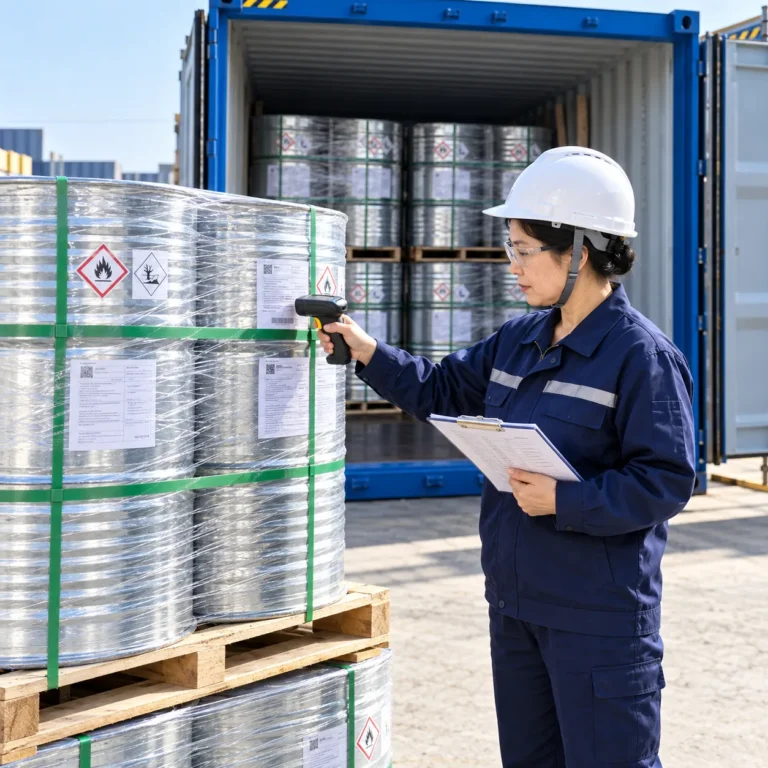
High quality chemicals, competitive prices from Shandong Fengtong Chemical.
Introduction to Shandong Fengtong Chemical Co., Ltd. and Its Market Position Shandong Fengtong Chemical Co., Ltd. has rapidly emerged as a trusted supplier in the global chemical industry, known for delivering high quality chemicals at genuinely competitive prices while ensuring stable supply to clients across multiple continents. Emphasis on High Quality: Rigorous Quality Control Processes and Certifications Quality assurance lies at the heart of Fengtong Chemical’s operations, with a comprehensive quality management system that governs every batch of product leaving the factory. The company implements strict incoming raw material inspections, in-process monitoring, and final product testing to ensure that each shipment meets or exceeds industry standards for purity, stability, and performance. Competitive Pricing: Direct Manufacturing and Cost Optimization One of the most compelling reasons businesses choose Fengtong Chemical is its ability to offer competitive prices without compromising on product quality or service levels. As a direct manufacturer of many chemical products, the company eliminates intermediary margins and passes those savings directly to customers, making it an attractive option for procurement teams working within tight budgets. Stable Supply: Large Inventory and Efficient Logistics Network Supply chain reliability is a critical concern for chemical buyers, and Shandong Fengtong Chemical Co., Ltd. addresses this challenge by maintaining a substantial inventory of finished goods and raw materials at its strategically located facilities. The company’s warehouses are stocked with a wide range of products, including phenolphthalein, 8-Hydroxyquinoline, silicone materials, disinfectant raw materials, and various industrial chemical solvents, ensuring that even large-volume orders can be fulfilled without delay. Company Strengths and Commitment to Partnership Behind every product and service offered by Shandong Fengtong Chemical Co., Ltd. is a dedicated team of professionals who bring deep industry knowledge and a customer-first mindset to their work. The company’s leadership has decades of combined experience in chemical manufacturing, international trade, and supply chain management, which informs strategic decisions about capacity expansion, technology adoption, and market development. Frequently Asked Questions (FAQ) What types of high quality chemicals does Shandong Fengtong Chemical Co., Ltd. supply? Shandong Fengtong Chemical supplies a wide range of products including phenolphthalein, 8-Hydroxyquinoline, pharmaceutical intermediates, industrial chemical solvents such as acetone and methanol, silicone materials, and disinfectant raw materials. The company focuses on ensuring high quality chemicals for pharmaceutical, agricultural, and industrial applications, with rigorous testing and certification for each batch. How does Fengtong Chemical ensure competitive prices while maintaining quality? The company operates as a direct manufacturer with a vertically integrated production model, eliminating intermediary costs. Advanced process automation, energy-efficient technologies, and long-term raw material contracts further reduce expenses. These savings are passed to customers, allowing the company to offer high quality chemicals at competitive prices without compromising on purity or consistency. What certifications does Shandong Fengtong Chemical hold for quality assurance? Fengtong Chemical holds ISO 9001 certification for quality management systems and complies with relevant industry standards. The company provides certificates of analysis (COA) with every shipment, detailing purity, composition, and batch traceability. This ensures that all high quality chemicals meet stringent regulatory requirements for pharmaceutical, food-grade, and industrial use. How does Fengtong Chemical guarantee stable supply for large orders? The company maintains a large inventory of finished goods and raw materials across multiple warehouses. A dedicated logistics team coordinates sea, air, and land transport with real-time tracking. Proactive communication and diversified supplier relationships ensure that stable supply is maintained even during market disruptions or peak demand periods. Can Fengtong Chemical provide custom formulations or specific packaging for my needs? Yes, the company offers custom blending, tailored purity grades, and flexible packaging options to meet specific customer requirements. Its technical sales team works closely with clients to develop solutions for unique applications, ensuring that high quality chemicals are delivered in formats that optimize handling and usage. What industries benefit most from Fengtong Chemical’s product range? Pharmaceutical companies, agrochemical manufacturers, industrial coating producers, personal care brands, and sanitation product makers all benefit from the company’s diverse portfolio. The availability of pharmaceutical intermediates, industrial chemical solvents, and specialty compounds makes Fengtong Chemical a versatile partner across multiple sectors. How do I request a sample or quotation for a specific chemical product? You can submit an inquiry through the CONTACT US page or reach out directly via email or WhatsApp. The sales team typically responds within 24 hours with product availability, pricing, and sample program details. Bulk orders and long-term contracts often qualify for volume-based discounts. Does Fengtong Chemical ship internationally, and what documentation is provided? Yes, the company exports globally with experience in customs clearance for North America, Europe, Southeast Asia, and the Middle East. Each shipment includes commercial invoices, packing lists, certificates of analysis, and safety data sheets as needed. The logistics team ensures all documentation complies with destination country regulations for high quality chemicals. What is the typical lead time for an order of industrial chemical solvents or intermediates? Lead times vary by product and order volume, but standard stock items can ship within 5–10 business days after order confirmation. Custom formulations or large bulk orders may require 15–25 business days. Fengtong Chemical’s large inventory and efficient logistics network help minimize lead times and ensure stable supply for time-sensitive projects. How can I stay updated on Fengtong Chemical’s latest products and industry news? You can visit the NEWS page regularly for company updates, market insights, and product announcements. The page features articles on topics such as phenolphthalein price trends and 8-Hydroxyquinoline market forecasts, helping buyers stay informed about factors affecting high quality chemicals and competitive prices.
Check ↗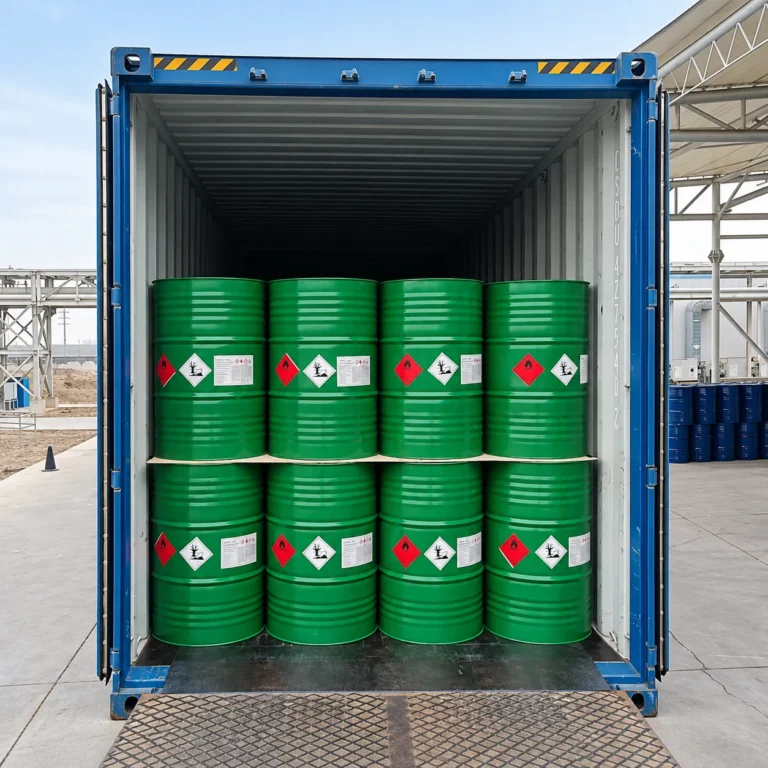
High-Quality Chemical Solvents for Industrial Use – Shandong Fengtong Chemical
Introduction to Chemical Solvents Chemical solvents are liquid substances that dissolve, suspend, or extract other materials without chemically altering them, forming the backbone of countless industrial processes across the globe. These versatile compounds enable reactions, facilitate cleaning, and carry active ingredients in sectors ranging from paint manufacturing to pharmaceutical synthesis, making them indispensable to modern production lines. In industrial settings, chemical solvents serve as the medium for chemical reactions, the vehicle for coatings and adhesives, and the agent for degreasing and purification, with their effectiveness directly impacting product quality and operational efficiency. Without high-performance chemical solvents, industries such as automotive coating, electronics cleaning, and pharmaceutical formulation would struggle to achieve the precision and consistency that today’s markets demand. The selection of appropriate chemical solvents hinges on factors like polarity, boiling point, evaporation rate, and purity level, all of which determine suitability for a given application. For businesses that rely on consistent output and strict quality standards, partnering with a reliable supplier of premium chemical solvents is not merely a procurement decision—it is a strategic investment in production reliability and end-product excellence. Shandong Fengtong Chemical Co.,Ltd has built a reputation for delivering exactly this level of dependability, offering a comprehensive portfolio of high-purity chemical solvents tailored to the rigorous needs of industrial buyers worldwide. The global demand for chemical solvents continues to expand as manufacturing sectors in emerging economies scale up and established industries pursue higher-efficiency formulations. From dissolving resins in paint production to extracting active compounds in pharmaceutical processing, chemical solvents touch nearly every manufactured good that reaches consumers and businesses alike. Manufacturers face increasing pressure to source chemical solvents that not only perform reliably but also meet evolving environmental and safety regulations, pushing suppliers to innovate in purity, packaging, and logistics. In this competitive landscape, the ability to secure consistent volumes of high-grade chemical solvents at fair prices can determine a company’s cost structure and market responsiveness. Shandong Fengtong Chemical understands these pressures intimately and has structured its operations to deliver chemical solvents that meet international purity benchmarks while offering the flexibility that dynamic supply chains require. Whether a buyer needs drum quantities for specialty production or bulk tanker loads for continuous manufacturing, the company’s infrastructure supports seamless fulfillment across order sizes. This introduction sets the stage for a deeper exploration of the types of chemical solvents available, the advantages of sourcing from a proven partner, and the practical steps to initiate a procurement relationship that drives long-term value. Comprehensive Range of Chemical Solvents for Every Industry Hydrocarbon Solvents: Versatile Workhorses Hydrocarbon solvents represent one of the most widely used categories of chemical solvents, prized for their ability to dissolve oils, greases, and non-polar compounds across a vast array of industrial applications. These solvents, derived from petroleum distillates, include aliphatic and aromatic varieties that offer distinct solvency profiles suited to different tasks, from thinning paints to cleaning mechanical parts. Among the aromatic hydrocarbon solvents, toluene stands out as a particularly valuable compound, offering strong dissolving power for resins, rubber, and adhesives while evaporating at a rate that supports smooth film formation in coatings. Toluene is frequently employed in paint thinners, ink formulations, and adhesive manufacturing, where its ability to blend with other chemical solvents enhances formulation flexibility and performance consistency. Shandong Fengtong Chemical supplies toluene with rigorously controlled purity levels, ensuring that manufacturers receive a solvent that delivers predictable results batch after batch. The company’s hydrocarbon solvent range also includes xylene, solvent naphtha, and specialized blends engineered for specific industrial tasks, all produced under quality management systems that trace each lot from raw material to delivery. For buyers who rely on hydrocarbon chemical solvents as core inputs, the consistency of supply and purity from Shandong Fengtong Chemical translates directly into fewer formulation adjustments and reduced production downtime. Alcohol Solvents and Oxygenated Compounds Alcohol solvents such as methanol, ethanol, isopropanol, and butanol occupy a central position in the chemical solvents market due to their excellent miscibility with water and broad solvency for polar and semi-polar substances. These chemical solvents are indispensable in pharmaceutical manufacturing, where they serve as reaction media, extraction agents, and crystallization solvents for active pharmaceutical ingredients. Ethyl acetate, an ester solvent formed from ethanol and acetic acid, exemplifies the value of oxygenated chemical solvents in applications requiring a pleasant odor, moderate evaporation rate, and strong dissolving power for nitrocellulose, oils, and resins. Ethyl acetate is widely used in flexographic and gravure printing inks, cosmetic formulations, and as a process solvent in pharmaceutical synthesis, where its low toxicity profile makes it a preferred alternative to more aggressive chemical solvents. Shandong Fengtong Chemical offers ethyl acetate in multiple purity grades, allowing customers to select the specification that aligns with their regulatory requirements and cost objectives. The company’s alcohol solvent portfolio also includes acetone, a ketone solvent renowned for its rapid evaporation and exceptional ability to dissolve plastics, coatings, and adhesives. Acetone is a staple in cleaning and degreasing operations, laboratory analysis, and as a carrier solvent in paint and coating formulations, where its volatility supports quick drying cycles that accelerate production throughput. By stocking a broad inventory of alcohol and oxygenated chemical solvents, Shandong Fengtong Chemical enables buyers to consolidate their procurement and reduce supplier complexity. Chlorinated Solvents and Specialty Chemicals Chlorinated solvents such as methylene dichloride (dichloromethane) and chloroform offer unique solvency characteristics that make them invaluable in specialized industrial and laboratory settings where standard chemical solvents fall short. Methylene dichloride is one of the most effective chemical solvents for dissolving polymer resins, waxes, and fats, and its low boiling point allows for easy recovery through distillation, making it a favorite in pharmaceutical extraction and aerosol formulations. This solvent is also widely used in paint stripping operations, where its deep penetration and rapid action remove multiple layers of coating without damaging the underlying substrate. Chloroform, another important chlorinated solvent, serves as a reaction medium in pharmaceutical synthesis and as an extraction solvent for natural products, though its use is carefully managed due to regulatory considerations. Shandong Fengtong […]
Check ↗