Shopping Cart
🔥 These products are limited, checkout within
00m 00s

When sourcing 8-Hydroxyquinoline from China, product specifications, purity, batch documentation, packaging, transportation requirements, and supplier reliability all affect a successful purchase. Whether you are a pharmaceutical intermediate distributor, agrochemical buyer, or specialty chemical importer, understanding these factors helps you make informed purchasing decisions.
When sourcing 8-Hydroxyquinoline from China, product specifications, purity, batch documentation, packaging, transportation requirements, and supplier reliability all affect a successful purchase. Whether you are a pharmaceutical intermediate distributor, agrochemical buyer, or specialty chemical importer, understanding these factors helps you make informed purchasing decisions.
This guide covers the main applications of 8-Hydroxyquinoline, the specifications to review, the factors affecting its price, export documentation, and how to evaluate a Chinese chemical supplier.
8-Hydroxyquinoline, also known as 8-quinolinol, quinolin-8-ol, or oxine, is an organic compound with CAS number 148-24-3. Its molecular formula is C9H7NO, and its molecular weight is approximately 145.16 g/mol.
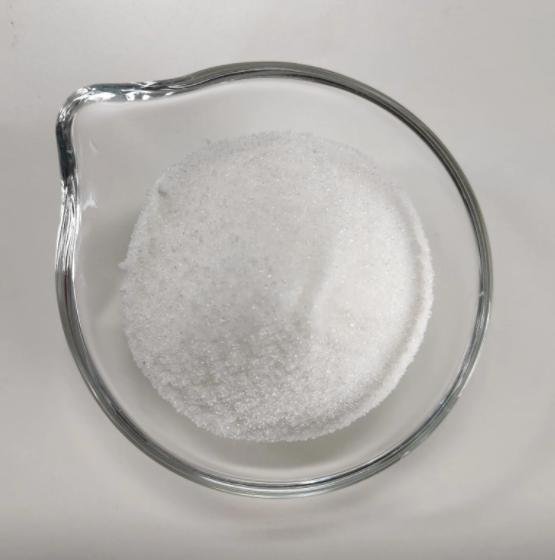
The compound is generally supplied as a white to pale-yellow crystalline powder. Its melting point is typically reported at around 73–76°C. It has limited solubility in water and dissolves more readily in several organic solvents, including ethanol and acetone.
Two properties account for much of its industrial value: antimicrobial activity and the ability to form complexes with certain metal ions. These characteristics support its use in analytical chemistry and as a starting material for related chemical compounds.
The required grade depends on the application. Buyers should distinguish the chemical identity from the specification of the offered product, including assay, impurity limits, and test methods.You can verify the compound identity and properties on PubChem
For example, industry builds several established antiseptic and antibacterial actives from 8-Hydroxyquinoline, including clioquinol, chlorquinaldol and nitroxoline. Consequently, buyers in this segment run tighter impurity and residual-solvent limits than buyers in other industries, and they usually validate a supplier against two or three consecutive batches before approving it. So if your end product is a registered pharmaceutical, ask for the impurity profile and not just the assay figure.
In crop protection and horticulture, formulators use the sulfate and citrate salts as fungicides and bactericides. By contrast, buyers in this segment care more about assay consistency between batches than about trace-metal limits, because a drifting assay changes the active dose in the finished formulation. Therefore, order either the free compound or the salt by its exact chemical name, since the two never substitute for each other.
8-Hydroxyquinoline forms stable complexes with many metal ions, which makes it useful for extraction, separation and quantitative determination. Industrial users apply the same chemistry for selective metal capture and recovery. For this reason, trace impurity levels often matter more than the headline assay, so agree on the specific metals you need controlled before you place an order.
Manufacturers also derive tris(8-hydroxyquinoline)aluminum, known as Alq3, from this molecule, and OLED developers use it as an electron-transport and emitting material. Alq3 remains a different product with different specifications. As a result, buyers in this segment need sublimation-grade material, where metal residues and organic impurities stay far below industrial levels.
Smaller volumes go into preservative systems for industrial products and into corrosion-inhibitor packages for metalworking fluids and coatings. Requirements vary widely here, so confirm the derivative, the concentration and the regulatory status in your market before choosing a grade.
First, ask for a batch-specific COA with the quotation, not after. Then compare the values against the reference range below; these are typical figures for technical and pharmaceutical-intermediate grade, not a guarantee for any specific supplier.
| Item | Example reference specification | Common test method |
|---|---|---|
| Appearance | White to pale yellow crystalline powder | Visual inspection |
| Assay (purity) | ≥ 99.0 % | HPLC or validated titration |
| Melting point | 73–76 °C | Capillary method |
| Loss on drying | ≤ 0.5 % | Oven drying or Karl Fischer |
| Residue on ignition | ≤ 0.1 % | Ignition method |
| Heavy metals (as Pb) | ≤ 10 ppm | Colorimetric method or ICP |
In addition, suppliers quote three grades under the same chemical name, and the price gap between them is large. Make sure the offer states which one you get.
| Grade | Typical use | What changes |
|---|---|---|
| Technical grade | Industrial chelation, preservatives, corrosion inhibition | Assay from about 98 %, wider colour range accepted |
| Pharmaceutical-intermediate grade | Active-ingredient synthesis | Tighter impurity and residual-solvent limits, full COA per batch |
| Sublimation grade | OLED and electronic materials | Purity 99.9 % and above, strict metal-residue control |
Moreover, if you are unsure how to read the documents that accompany a shipment, our guide to COA and SDS for chemical imports explains what each certificate should contain.
Knowing the route helps you read a COA. Today, most Chinese capacity builds 8-Hydroxyquinoline from 2-aminophenol through the Skraup synthesis, followed by cyclisation and purification. Alternatively, some producers start from quinoline-8-sulfonic acid and proceed by alkali fusion. Both routes give the same molecule, yet they leave different trace impurities behind, and that difference is exactly what a pharmaceutical buyer pays for.
Purification separates the grades. Producers distil or recrystallise technical material once. Pharmaceutical-intermediate grade then goes through additional recrystallisation with tighter in-process controls and fuller analytical release. Finally, producers purify sublimation grade under reduced pressure and handle it in a clean environment; consequently, equipment cost, yield loss and final price all rise sharply.
So ask which route and which purification step produced the offered 8-Hydroxyquinoline. A supplier who cannot answer is reselling, and a reseller cannot control the impurity profile you approve.
In addition, 8-Hydroxyquinoline discolours on prolonged exposure to light and air, and the colour shift is the first visible sign of oxidation. Store drums sealed in a cool, dry, ventilated area away from direct sunlight, and keep the material separated from strong oxidizers, acids and foodstuffs. Once you open a drum, reseal it promptly and use the contents within a defined period rather than leaving it open on a warehouse floor.
Suppliers normally quote a two-year shelf life from the date of manufacture for material in sealed original packaging, and they state the retest date on the COA. If you hold stock beyond that date, request a retest of assay and appearance before releasing it to production. For sublimation grade, add a check on metal residues, because handling in a non-controlled area can degrade the very specification you paid for.
There is no public price index for 8-Hydroxyquinoline, so quotes move for reasons buyers cannot see on a trading platform. Five factors explain most of the variation between offers.
Ask for a quotation tied to a specific batch and a stated validity period. An offer without a batch number and an expiry date is not comparable with a firm one.
Our standard export packaging is a 25 kg fiberboard drum with a double polyethylene liner, and laboratory and sublimation grades also ship in 1 kg or 5 kg foil packs. Moreover, confirm the net weight, the liner material and the labelling text before production starts, because relabelling at the port is expensive and slow.
In practice, minimum order quantity depends on grade and packaging. Suppliers commonly offer technical grade from a single drum, while buyers usually order sublimation grade by the kilogram. Production lead time usually runs two to three weeks after order confirmation, and longer when a plant sits under inspection or runs a campaign for another product. Put the lead time in the purchase order rather than accepting it verbally.
The UN Model Regulations do not list 8-Hydroxyquinoline as dangerous goods for transport; however, confirm Section 14 of the current SDS with your forwarder before booking. Store it sealed, cool and dry, away from strong oxidizers and direct sunlight, and treat it as a toxic solid during handling: dust mask, gloves and eye protection.
In fact, documentation is where inexperienced suppliers of 8-Hydroxyquinoline fail. A complete shipment from China normally includes a batch COA, an SDS in the required format and language, a packing list, a commercial invoice, and a certificate of origin where your country requires one for preferential or regulatory purposes. For pharmaceutical-intermediate buyers, add the manufacturer’s declaration and any customer-specific testing protocol.
The product falls under HS code 2933.49 as a quinoline derivative; therefore, confirm the exact national tariff line with your customs broker, because the last digits differ between markets. Meanwhile, Shanghai and Qingdao remain the main export ports for this product, and both handle FOB and CIF terms. If you buy CIF, check that the quoted freight matches the current market, since freight has been the largest single swing factor in landed cost over the past two years.
Therefore, screen the company before you screen the price of its 8-Hydroxyquinoline. Six checks catch most of the risk.
For a deeper look, our separate guide on how to choose a reliable chemical supplier in China sets out the full evaluation framework, including factory audit points and payment terms.
148-24-3. Quote the CAS number together with the chemical name in every inquiry, because several quinoline derivatives have similar trade names and a name-only request invites the wrong product.
Technical, pharmaceutical-intermediate and sublimation grade are the three you will see most often, plus reagent grade for laboratory supply. In every case, ask for the specification sheet of the exact grade offered, because the grade name alone tells you nothing.
Suppliers usually quote technical grade from one 25 kg drum, while sublimation grade commonly sells by the kilogram. Production takes about two to three weeks after confirmation, plus transit time, so plan four to six weeks door to door for a first order.
Grade, volume, raw-material cost and freight. Because no public index exists, compare offers only when quantity, grade, packaging and Incoterm are identical; otherwise you are comparing different products.
Yes. Oxine is a common trade synonym for 8-Hydroxyquinoline, as are 8-quinolinol and quinolin-8-ol. The CAS number 148-24-3 is the reliable identifier when names differ between suppliers and markets.
Yes. Suppliers normally keep laboratory packs of 1 kg or 5 kg for evaluation, and most ship them by courier within a week. Consequently, test the sample against your own analytical method before you approve a production lot.
Shandong Fengtong Chemical Co., Ltd. exports fine chemicals and pharmaceutical intermediates to buyers in Asia, Africa and Europe. Alongside 8-Hydroxyquinoline we supply phenolphthalein (CAS 77-09-8) and a range of intermediates and solvents, and we handle sourcing, packing and export documentation in-house.
Every order ships with a batch COA and SDS, we supply samples for testing before the first commercial lot, and we pack material in 25 kg fiber drums to export standard. Send your target specification, monthly quantity and destination port to ethan@fengtongchemical.com, and we will reply with a COA-backed quotation within one working day.
A practical guide for Southeast Asian buyers on choosing a reliable chemical supplier in China: supplier types, COA and SDS documentation, factory qualifications, packaging, Incoterms, and…
Read MorePhenolphthalein is a well-known chemical compound widely used as an acid-base indicator in laboratories and analytical chemistry. Its distinctive color change under different pH conditions makes…
Read MoreTwo documents decide whether a chemical shipment clears customs and passes quality review: the COA and SDS. Here is how to read them, verify them, and…
Read MoreCustom synthesis, process development, CDMO, and OEM — our technical team delivers from milligram to metric-ton scale.
Contact Our Experts ↗